

Front desk
Booking and reminders that agree with the diary
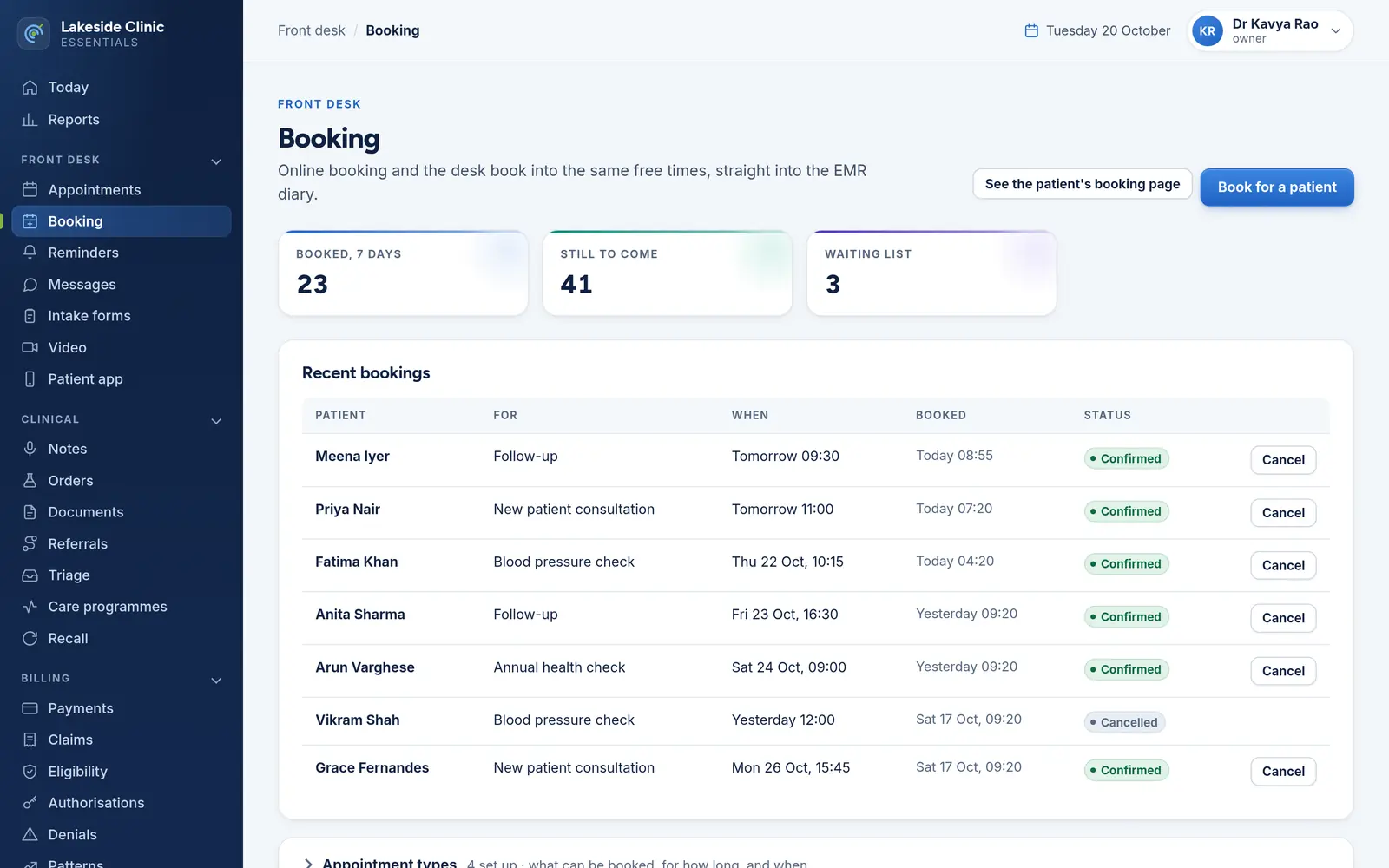
Patients book into the same free times the desk sees, written into the EMR. Reminders go by SMS, WhatsApp or email — and stop the moment the visit is cancelled.
The EHR you keep. The front desk you always wanted.
Certified OpenEMR hosted exactly as it ships. A modern EMR on the same database. And 25 modules for booking, reminders, notes, claims and HL7 integration — each switched on per clinic, each useful on its own.

Your records stay in a certified, unmodified OpenEMR. Everything a practice actually runs on — the front desk, the phone, the claims — is added around it, through its own API, without touching a single row of its database.
ONEemr reads and writes the OpenEMR database directly. Put a modern interface in front of your staff today; stock OpenEMR still opens the same charts tomorrow.
If you cannot leave, it is not a system — it is a hostage arrangement. Every record held here exports, decrypted and readable by whoever comes next, on any ordinary Tuesday.
The product, not a mock-up
Four of the modules, as they appear in the product. Every screen on this site is the real interface, shown with sample data.
Front desk
Patients book into the same free times the desk sees, written into the EMR. Reminders go by SMS, WhatsApp or email — and stop the moment the visit is cancelled.
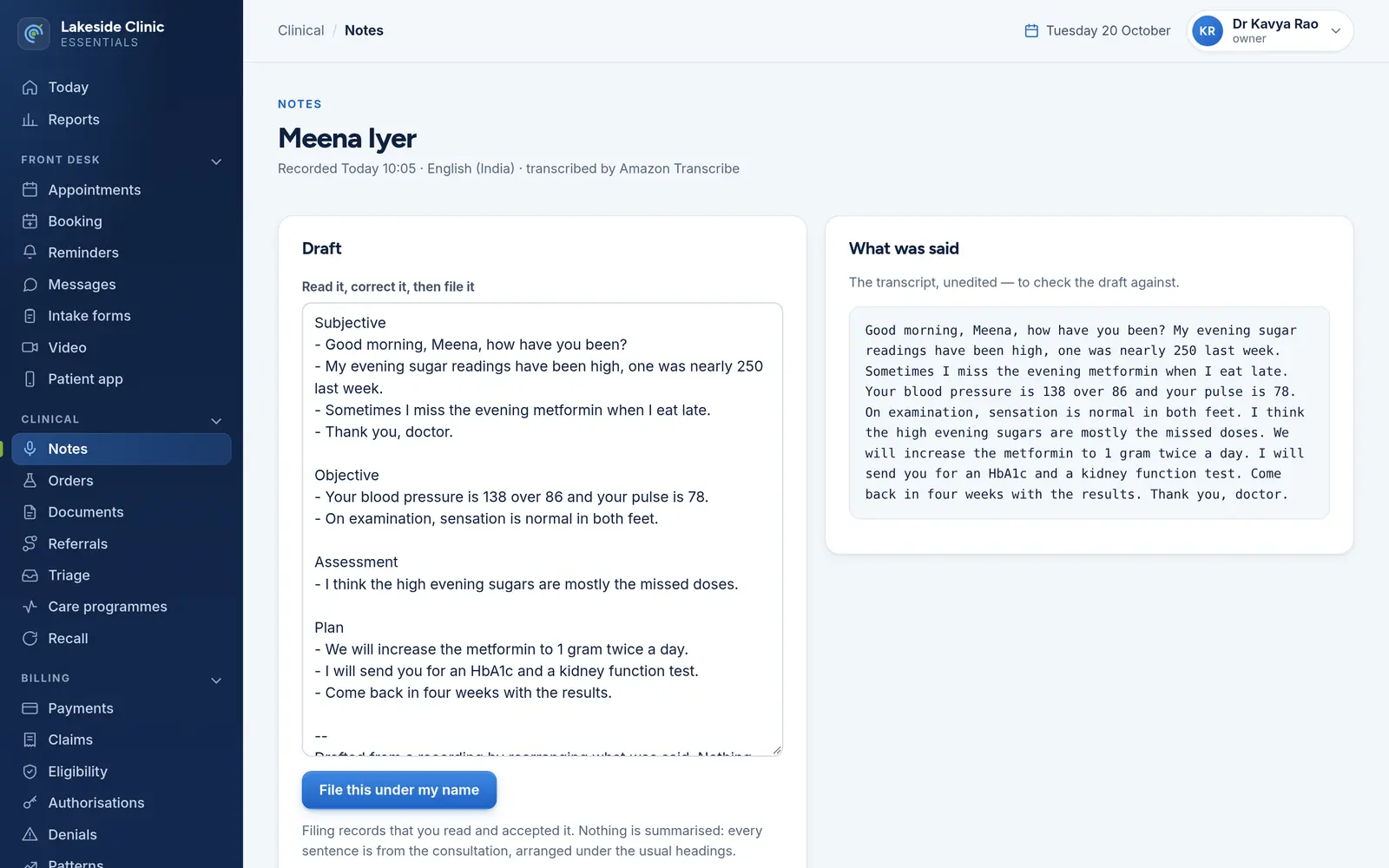
Clinical
The consultation is transcribed and arranged under familiar headings. Nothing is summarised and nothing files itself; the recording is deleted once the transcript exists.
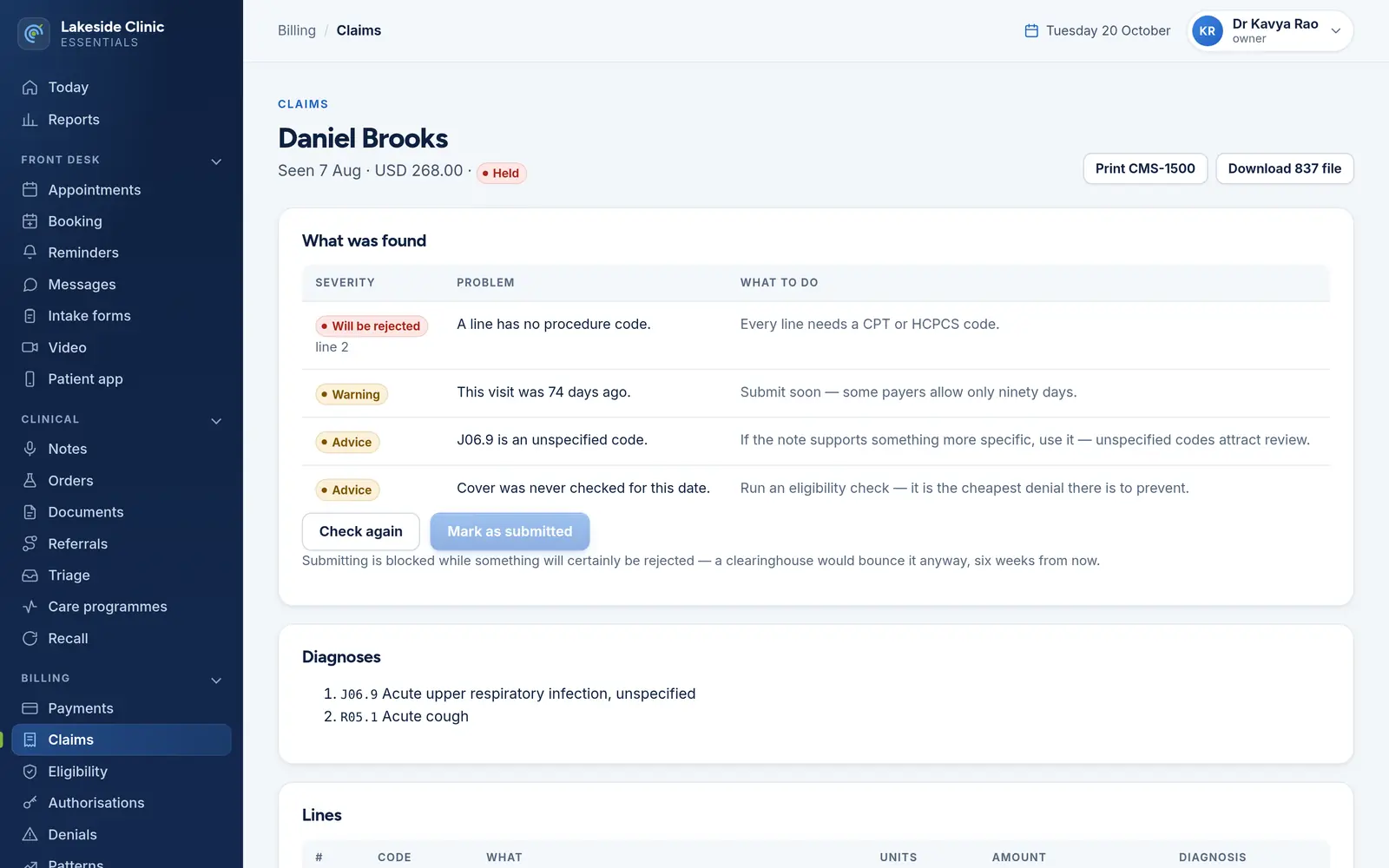
Billing
Claims are checked before they leave, with the fix named beside each problem. Remittances come back as a worklist grouped by what to do.
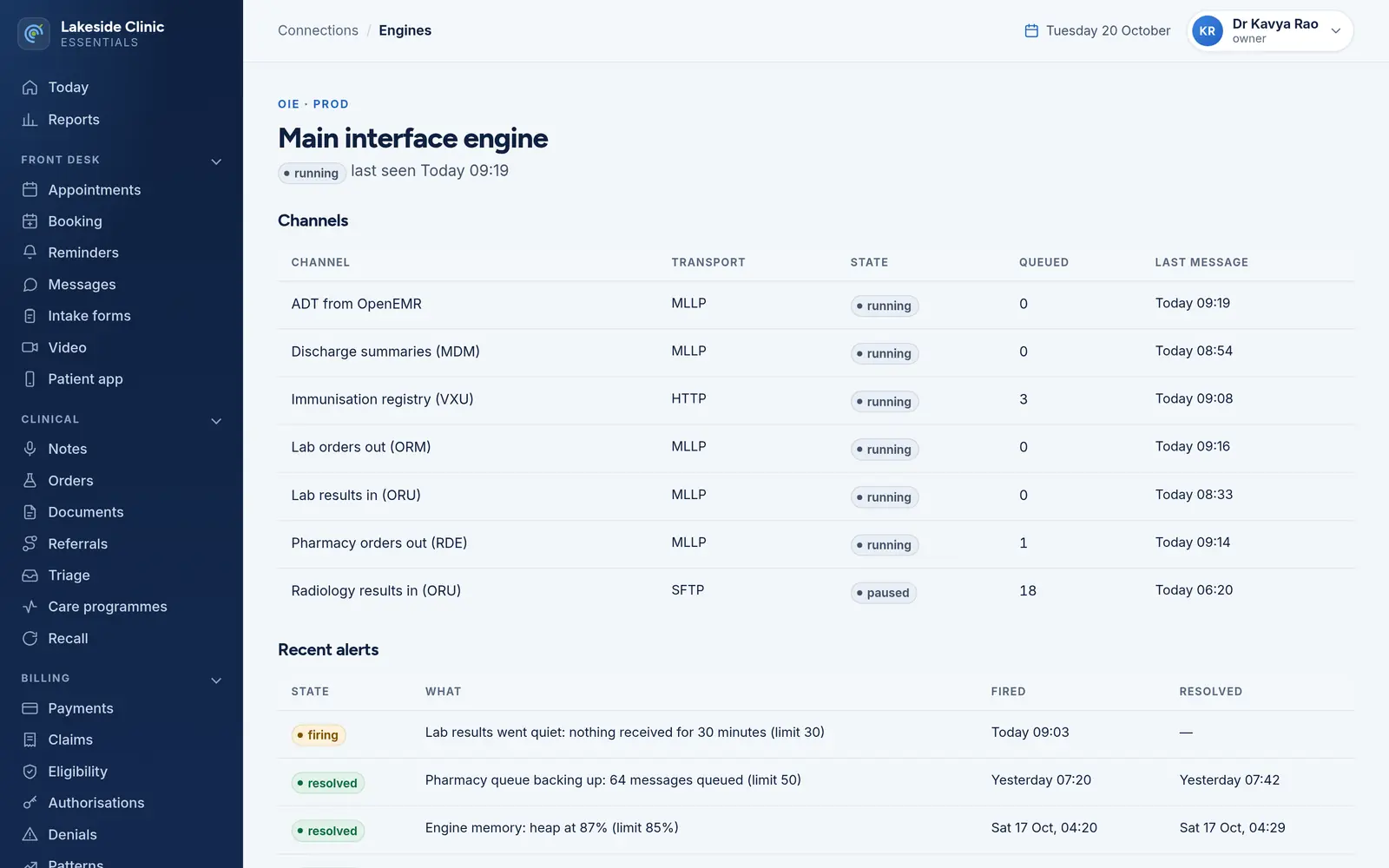
Connections
HL7 engines monitored channel by channel, whether we run them or you do. Alerts fire once and resolve themselves, and a feed that goes quiet is noticed before a clinician asks where the results went.
Essentials
Booking, reminders, messages, forms and video — the work that ties up the phone.
Notes, orders, documents, referrals and the patients who should be back by now.
Claims, eligibility, payments, authorisations and the denials that come back.
Your EMR, your interface engines, your own systems, and moving records in or out.
The clinician’s phone app, shared phrases and the reports a manager asks for.
We host certified OpenEMR unchanged, build a modern EMR on the same database, and add the modules a practice needs around both.
Every record this product holds can be exported, decrypted and read by whoever comes next. Read how it is protected while it is here.
Meet the practice
Booking, reminders and intake off the phones. Claims checked before they leave. Denials grouped by what to do. Walk through the whole thing on a live system — no sales call required.
Open the live demo
Two countries, properly
CMS-1500 and X12 claims, 835 remittances and 270/271 eligibility for US billing; GST on statements, DLT-registered SMS, WhatsApp reminders and Indian-language transcription for clinics in India.