

Reads the 835
Load the X12 835 remittance file a payer sends. Loading the same file twice is recognised, and nothing is counted again.
Billing / Denials
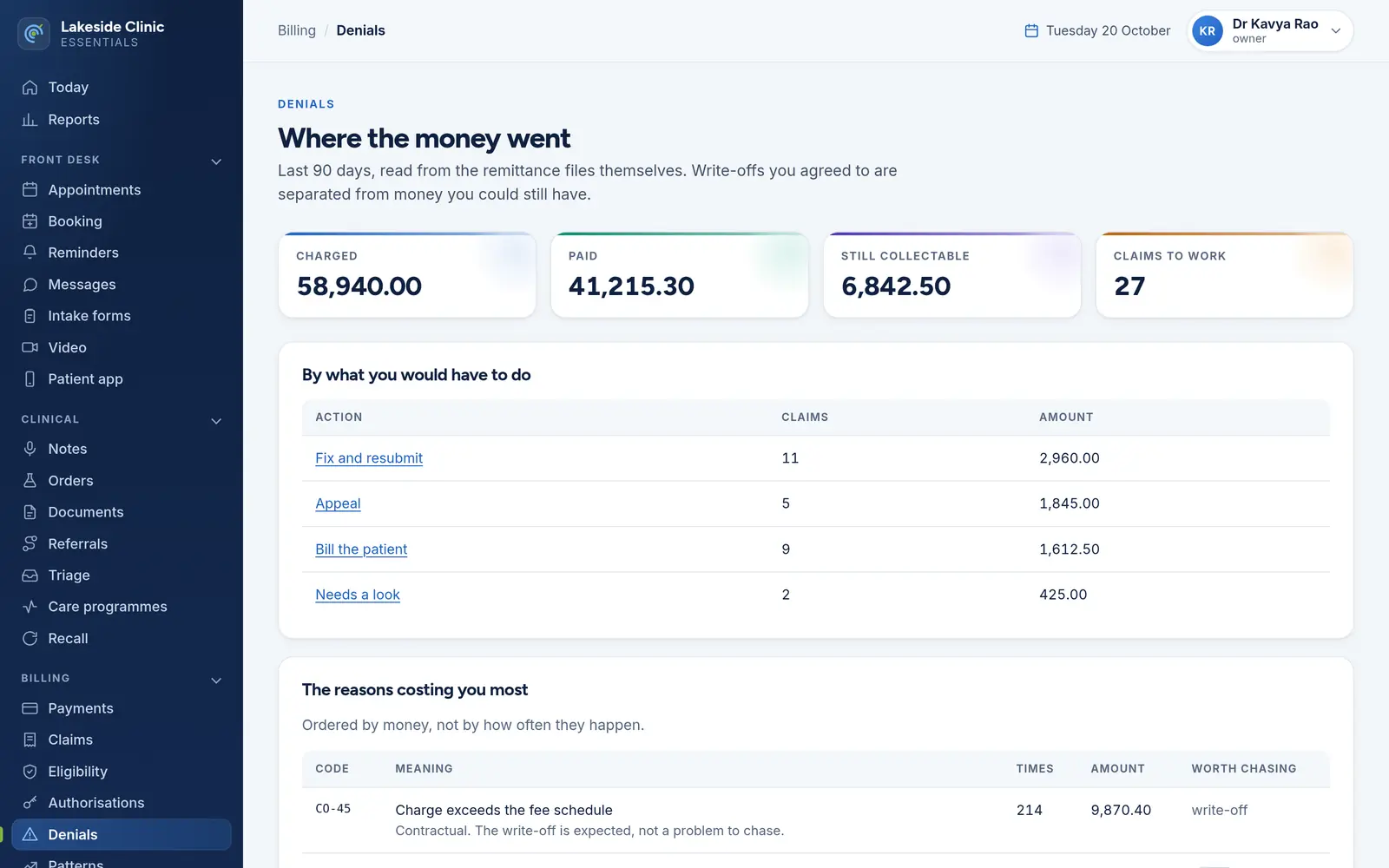
The 835 remittance file a payer sends is the most complete account of a practice’s money — and a wall of asterisks. Loaded here, it becomes a worklist grouped by what to do, with contractual write-offs separated from money still worth chasing.
What it does
Load the X12 835 remittance file a payer sends. Loading the same file twice is recognised, and nothing is counted again.
About twenty common reason codes are explained and filed under what to do — fix and resubmit, appeal, bill the patient, write off, or needs a look. Anything else is flagged, not guessed.
Contractual write-offs are kept apart from money still worth chasing, and the claims to deal with are listed largest first.
A report over any period up to a year: collectable money by action, the reason codes costing most, and charged, paid and denied by payer.
One click turns a patient balance into a payment request, with Payments switched on.
Results post back to claims built in Claim scrubbing when the claim number and amount match.
How it works
Upload the payer’s 835 file.
Each denial is explained and filed under what to do about it.
Fix, appeal, bill or write off — and mark each one dealt with, with a note.
What it needs
Every module switches on and off by itself, per clinic, with its own screens, permissions and audit trail.
Worth knowing
It needs no EMR at all — it works from the remittance file alone, which makes it the revenue feature that works for every clinic on the first day. Reason codes outside its list are marked for a person rather than interpreted.
The demo runs every module against an unmodified OpenEMR, with invented patients. Nothing to install and no sales call.


