

Fixed stages
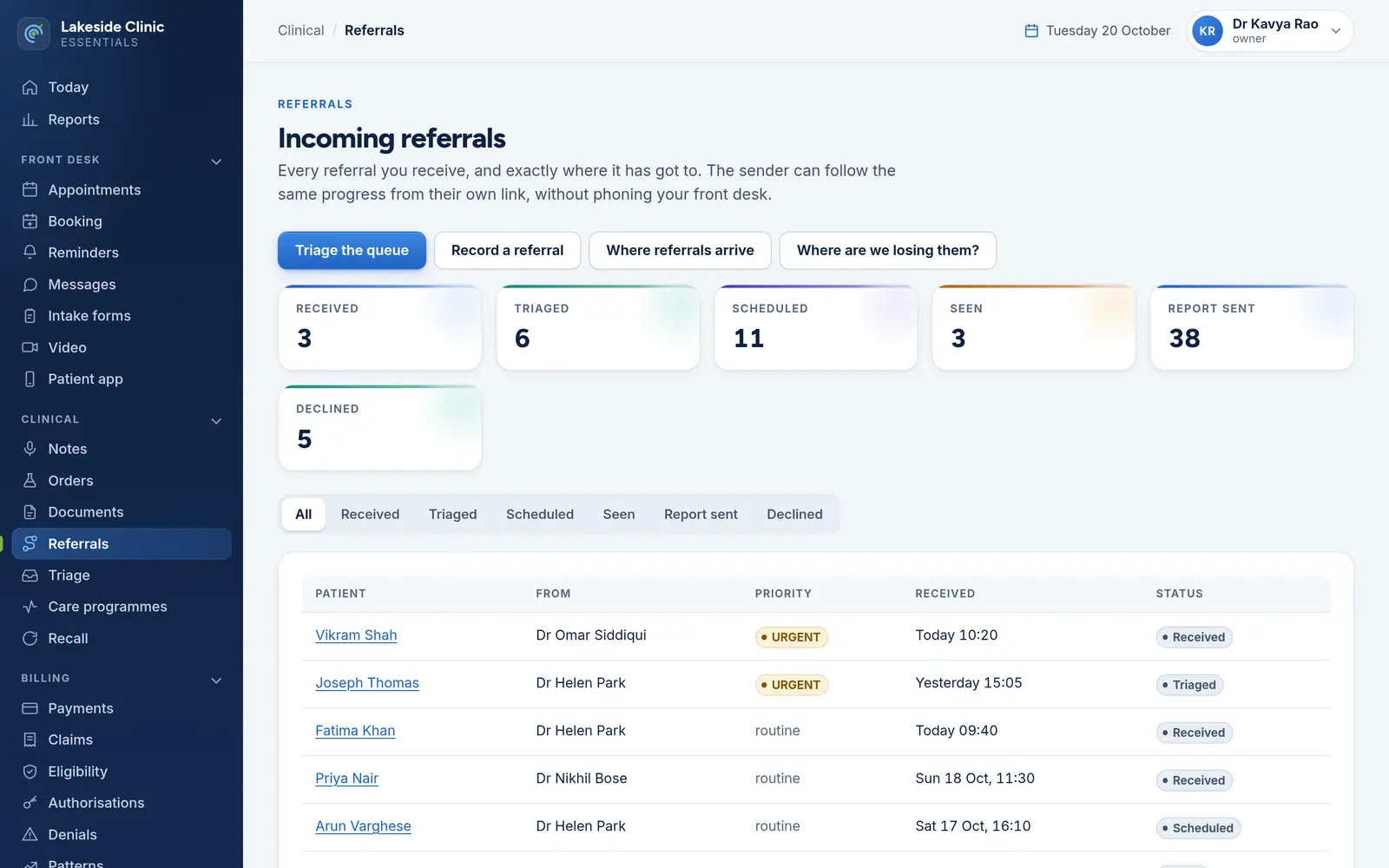
Received, triaged, scheduled, seen, report sent — or declined. Moves out of order are refused, scheduling needs a date and time, and every move records who made it.
Clinical / Referrals
Referrals that arrive by fax or are entered by hand move through fixed stages, so where each one has got to is a fact rather than a guess. The referrer gets a link that answers “what happened to the one we sent?” without a phone call.
What it does
Received, triaged, scheduled, seen, report sent — or declined. Moves out of order are refused, scheduling needs a date and time, and every move records who made it.
Undecided referrals, urgent first and then longest waiting, with anything past the waiting limit flagged. Accept or decline on the card.
No login. It shows initials and a stage, nothing clinical; it is rate-limited and every view is audited. A printable letter covers senders who work on paper.
Referrals arrive through a signed fax-service connection or are entered by hand, and repeat deliveries become one referral.
A text to the office number says how many are still waiting — no patient details, and only when there are some.
A report shows where referrals stall between stages.
How it works
By fax or entered by hand; duplicates merge.
Accept with a note, or decline with a reason.
Schedule, see, send the report — the sender’s link updates at each step.
What it needs
Every module switches on and off by itself, per clinic, with its own screens, permissions and audit trail.
Worth knowing
Portal sources such as Epic Care Link, athenahealth and Direct can be listed as sources, but no portal connection is built yet; until one is, those referrals are entered by hand.
The demo runs every module against an unmodified OpenEMR, with invented patients. Nothing to install and no sales call.


