

Conversations, not copies
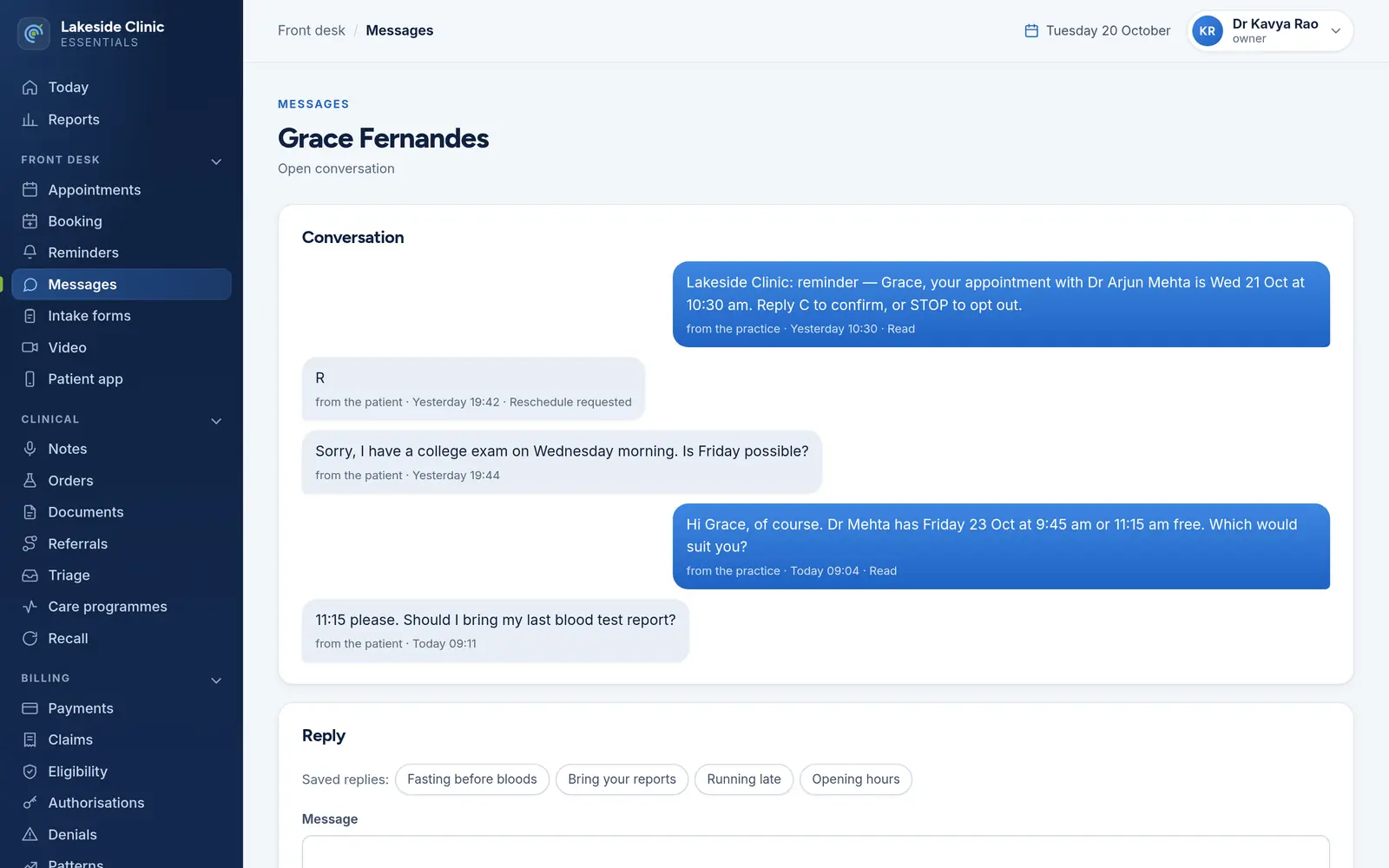
A conversation is the practice’s texts and the patient’s replies, read from the messages already sent and received.
Front desk / Two-way messages
“Can I move my appointment?” and “do I need to fast?” arrive as replies to reminders. Here they become threads with an owner, saved replies and a state, instead of a list of unread lines nobody is responsible for.
What it does
A conversation is the practice’s texts and the patient’s replies, read from the messages already sent and received.
A conversation can be assigned to one person, with Open, Mine and Closed views and unread counts. A closed conversation reopens when the patient writes again.
Replies respect opt-outs and quiet hours, and a refused reply shows as “not sent”, with the reason, rather than looking sent.
One-word replies are labelled in the thread — “Confirmed”, “Reschedule requested”.
The answers the desk types most often, ordered by use, inserted with one click.
How it works
To a reminder, or starts a conversation of their own.
Assigned to a person, visible to everyone.
And reopens by itself if the patient writes again.
What it needs
Every module switches on and off by itself, per clinic, with its own screens, permissions and audit trail.
Worth knowing
It builds on Reminders, which is where replies arrive, so the two are switched on together. Messages are texts, not a secure in-app chat.
The demo runs every module against an unmodified OpenEMR, with invented patients. Nothing to install and no sales call.


