

Browser to browser
Picture and sound go directly between the two browsers and are never recorded. The server only passes the brief connection handshake, deleting each message once delivered.
Front desk / Video visits
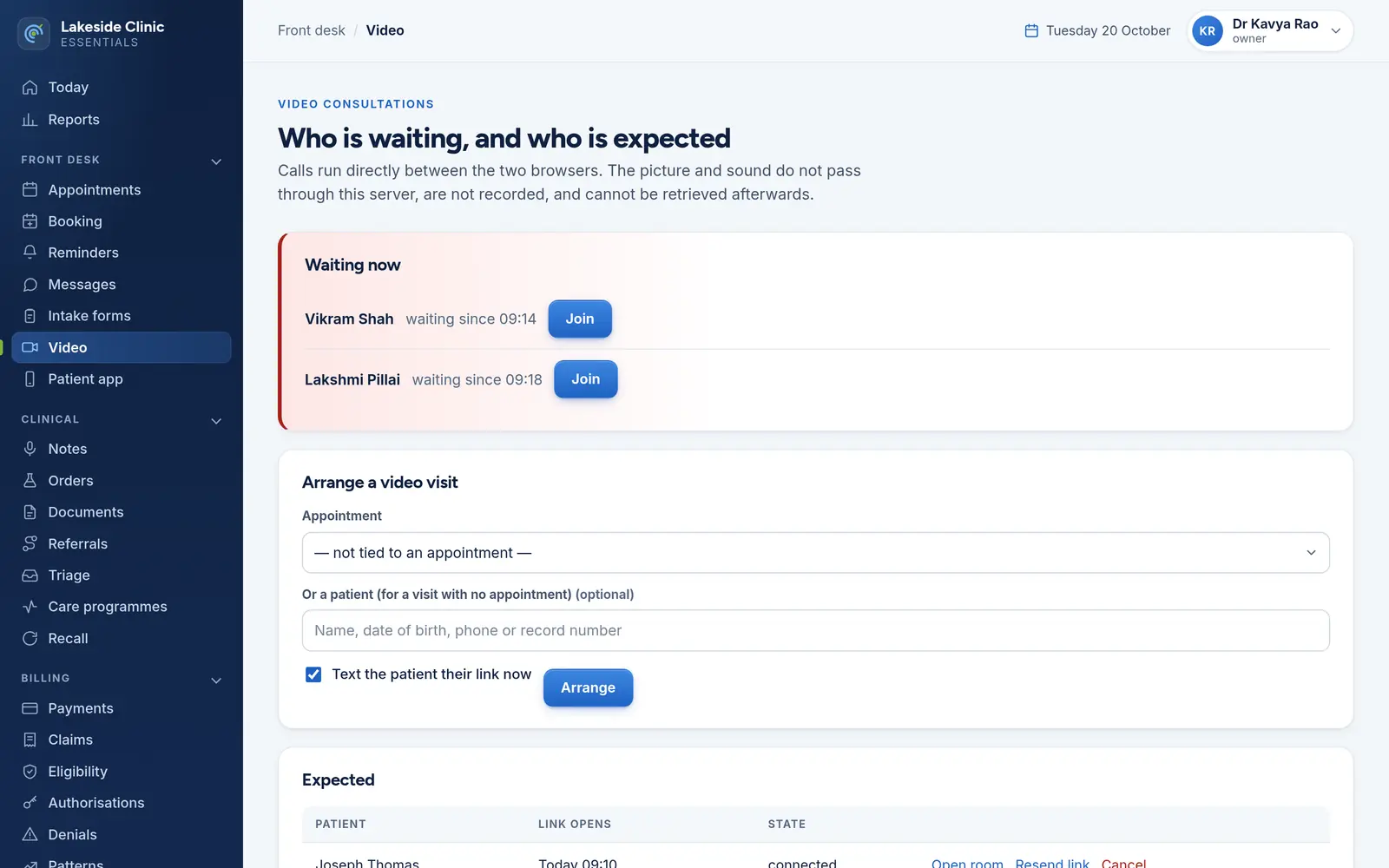
One-to-one video where the two browsers connect directly. There is no media server in the middle, so the consultation is not recorded and cannot be retrieved — by us or anyone else.
What it does
Picture and sound go directly between the two browsers and are never recorded. The server only passes the brief connection handshake, deleting each message once delivered.
From an appointment or for any patient, with the link texted — the text carries only the practice name and the link. An appointment gets one live link, never two.
The patient’s link opens twenty minutes before the appointment and closes three hours after.
Who has arrived and since when, refreshed every twenty seconds and counted on the Today page. A visit nobody joined is marked missed.
An optional relay server such as coturn carries calls that cannot connect directly; each call gets its own short-lived login, and the shared secret never reaches a browser.
How it works
From the appointment; the link goes by text.
The patient opens the link and appears in the waiting room.
One click, and the two browsers connect.
What it needs
Every module switches on and off by itself, per clinic, with its own screens, permissions and audit trail.
Worth knowing
One to one only: three or more people need a media server, which this is not. Roughly one call in five cannot connect directly — hospital and office firewalls — and needs the relay configured.
The demo runs every module against an unmodified OpenEMR, with invented patients. Nothing to install and no sales call.


