

Insurance on file
Payer, payer ID, member number, group and the dates the cover runs, for each patient. Member numbers are encrypted, and lists show only the last four digits.
Billing / Eligibility
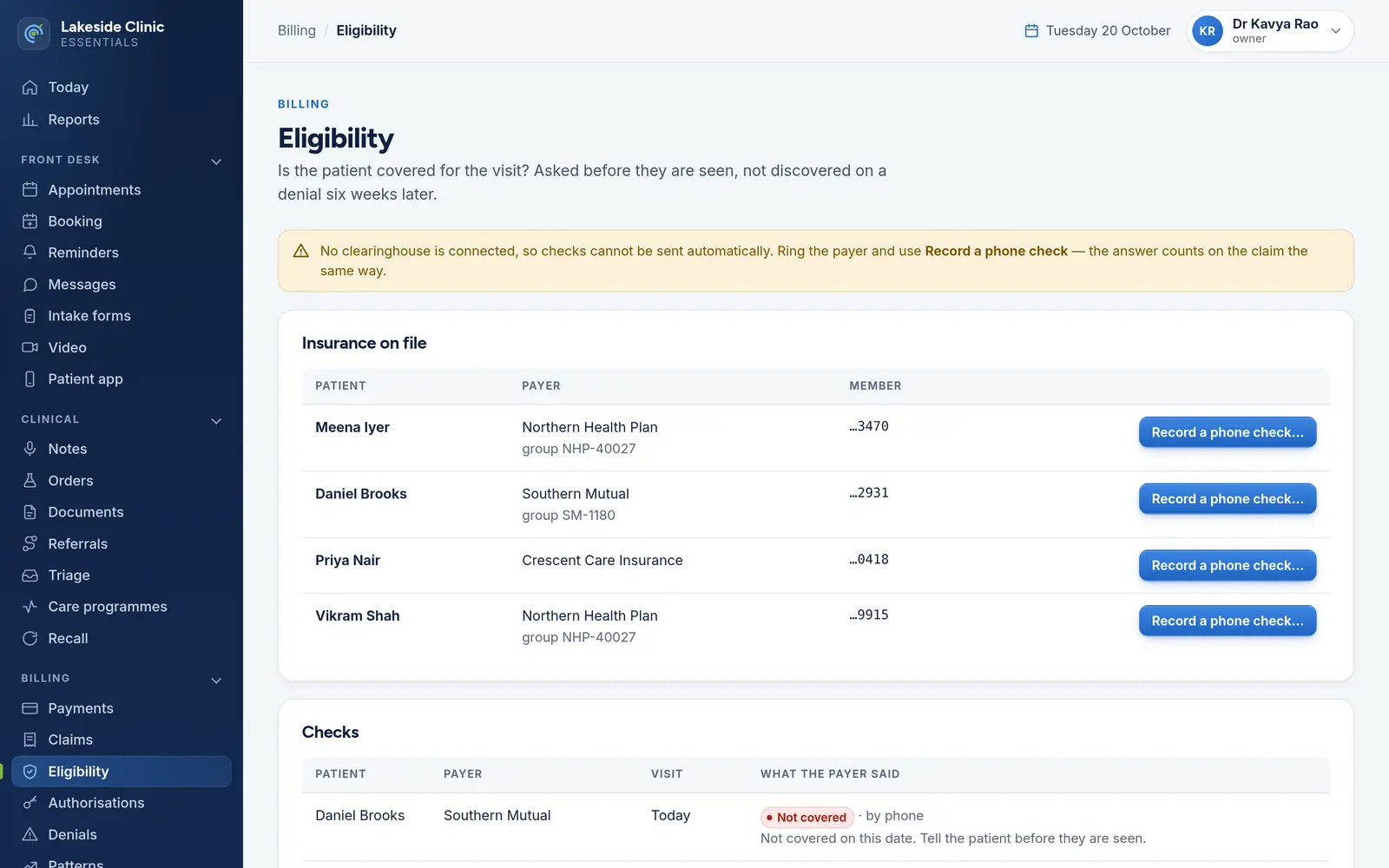
Record each patient’s cover, ask the payer before the visit, and keep the answer against the appointment. Nobody is ever shown as covered when nobody checked.
What it does
Payer, payer ID, member number, group and the dates the cover runs, for each patient. Member numbers are encrypted, and lists show only the last four digits.
Ring the payer and record the answer — covered or not, copay, deductible left, plan, and who confirmed it. It counts on the claim exactly like an electronic check.
With a clearinghouse connection, a check goes out as an X12 270 and the 271 reply is read back into cover, plan, copay, coinsurance, deductible and the plan’s start and end dates.
Once an end date is on file, from a 271 or typed in, a visit after it is flagged on the claim and the patient’s cover shows when it ended.
A rejected question or a failed check is never shown as covered — and never as uninsured.
A response from a payer portal or an email can be pasted onto a pending check.
An answered check for the visit date satisfies the claim rule that cover was never checked.
How it works
Add the patient’s insurance at booking or at the desk.
Electronically where a clearinghouse is connected; otherwise by phone, writing down what the payer said.
Somebody not covered on the visit date hears it before they are seen, not on a bill.
What it needs
Every module switches on and off by itself, per clinic, with its own screens, permissions and audit trail.
Worth knowing
Electronic checks need a connection to your clearinghouse, and no clearinghouse connector ships yet — so today checks are recorded by telephone, exactly as the screen above shows.
The demo runs every module against an unmodified OpenEMR, with invented patients. Nothing to install and no sales call.


