

Published instruments, scored properly
PHQ-9 and GAD-7 are built in with their published wording, answer scale and severity bands. A practice’s own questionnaire is never given a score.
Front desk / Intake forms
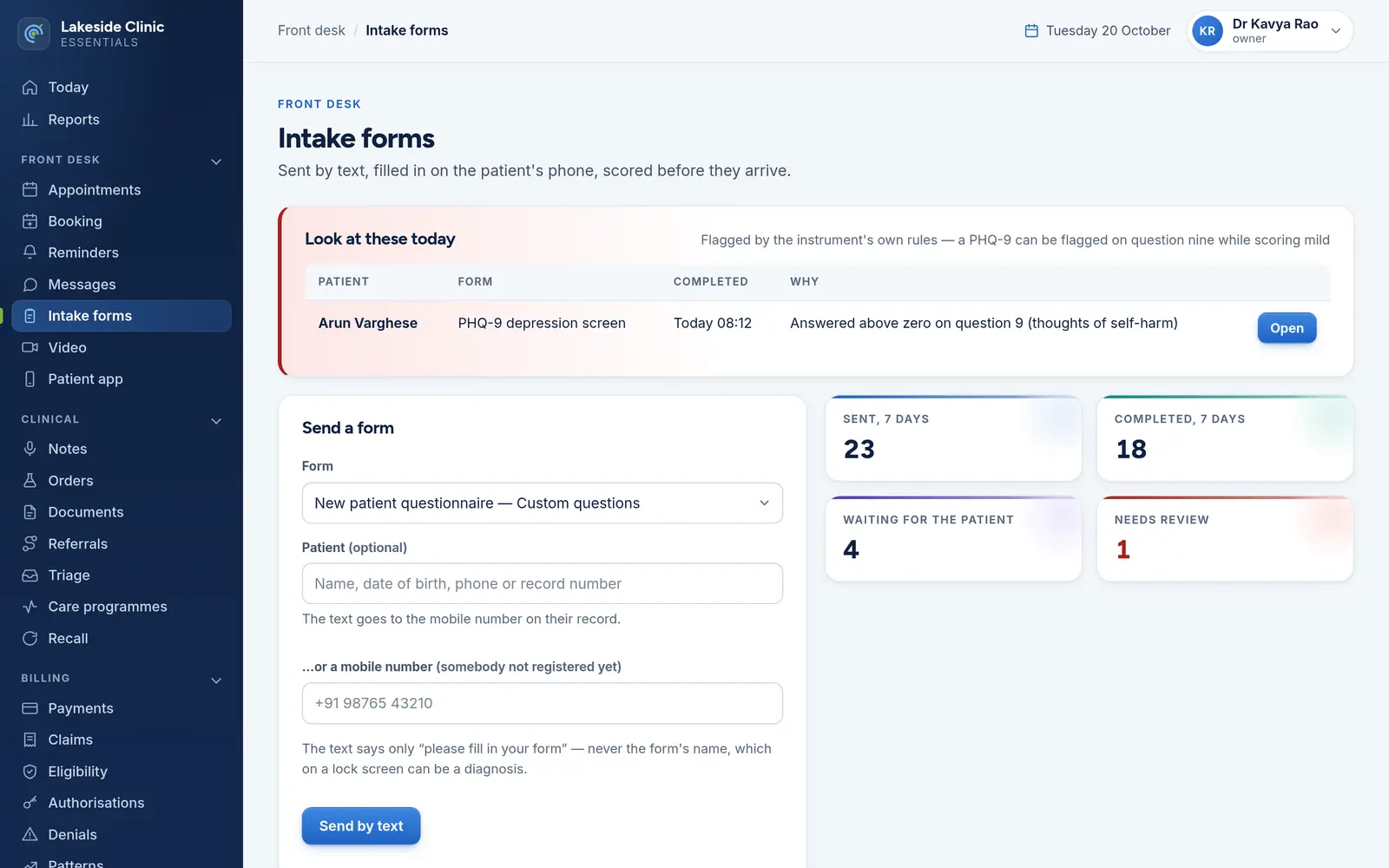
Forms go out by text, are completed on the patient’s phone, and come back scored. Published screening instruments score themselves by fixed rules, and a result that needs attention is flagged to the practice straight away.
What it does
PHQ-9 and GAD-7 are built in with their published wording, answer scale and severity bands. A practice’s own questionnaire is never given a score.
To the number on the record, or any mobile for somebody not yet registered. The text says only “please fill in your form” — never the form’s name. Links expire after 14 days.
A PHQ-9 is flagged when question 9 is answered above zero, whatever the total, and either questionnaire in its severe range. An incomplete one gets no total.
Flagged results stay at the top, and on the Today page, until somebody marks them reviewed — which is audited.
Forms still to fill in appear in the patient’s app.
How it works
Pick the form and the patient; the link goes by text.
On their phone, before the visit.
Flagged results wait at the top until reviewed.
What it needs
Every module switches on and off by itself, per clinic, with its own screens, permissions and audit trail.
Worth knowing
Only published instruments are scored, by fixed rules in the code; a practice’s own forms collect answers without a score.
The demo runs every module against an unmodified OpenEMR, with invented patients. Nothing to install and no sales call.


