

Six kinds of order
Prescriptions, medicines already taken, diagnoses, lab tests, imaging and referrals — coded in the system that suits each (RxNorm, ICD-10, LOINC or CPT) when a code is given.
Clinical / Orders
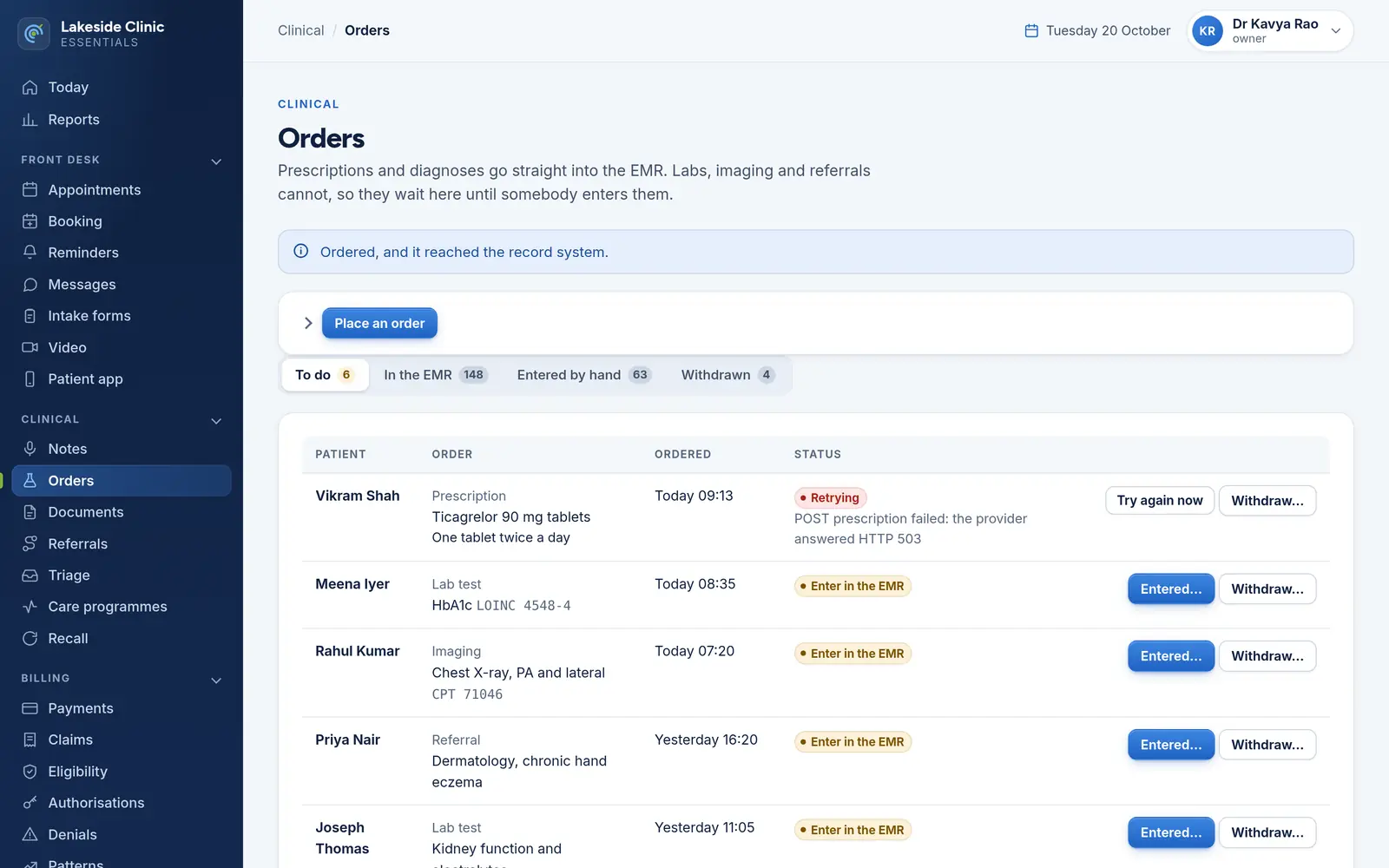
Prescriptions, diagnoses, tests and referrals are recorded here and then sent to the EMR. Each one ends in one of three states: in the EMR, failed and being retried, or waiting for a person to enter it by hand.
What it does
Prescriptions, medicines already taken, diagnoses, lab tests, imaging and referrals — coded in the system that suits each (RxNorm, ICD-10, LOINC or CPT) when a code is given.
Every order is recorded before it is sent, and ends in one of three states: in the EMR, retrying, or waiting for a person.
With OpenEMR, prescriptions, medicines and diagnoses go in through its API.
Lab, imaging and referral orders have no OpenEMR endpoint, so they wait on a list until somebody marks them entered.
Temporary failures are retried automatically with growing gaps; after five failures the order becomes a job for a person rather than disappearing.
An order not yet in the EMR can be withdrawn with a reason and stays visible as withdrawn.
How it works
Place it here, with a code if you have one.
It goes to the EMR, or is retried if the EMR is unreachable.
What the EMR cannot take waits on the to-do list until a person enters it.
What it needs
Every module switches on and off by itself, per clinic, with its own screens, permissions and audit trail.
Worth knowing
What can be sent depends on the EMR. Against OpenEMR today, lab, imaging and referral orders are always entered by hand — the list makes sure they are, rather than pretending they were sent.
The demo runs every module against an unmodified OpenEMR, with invented patients. Nothing to install and no sales call.


